Earlier this week, I got a new phone, the Samsung Galaxy S24. It replaces the S21 that I’ve had for the past three years.

On paper, the differences between the phones are fairly small. In practice, though, they add up to big improvements.
First off is the size. It’s really hard to understand the difference a few millimeters or grams makes when comparing phone specs. But with slightly less height and weight, this thing fits my hand far better than the S21. The slightly thinner case that I bought, and the more squared-off sides, make the overall package feel even more svelte. It’s not as satisfying to hold as my old Pixel 3 (or Carrie’s identically-sized Pixel 5), but it’s noticeably better than the S21.
The speed of the CPU and chipset is also not something I tend to think much about when looking at spec sheets. But, once again, the difference of three years is very apparent when using the phone. Everything just feels snappier, from installing apps to editing photos.
Speaking of photos, the cameras are excellent. There aren’t as many specialty lenses as on the S24 Ultra or other giant phones, but photos are sharp and vibrant (some argue overly vibrant) and the 3x zoom and wide angle lenses come in handy.
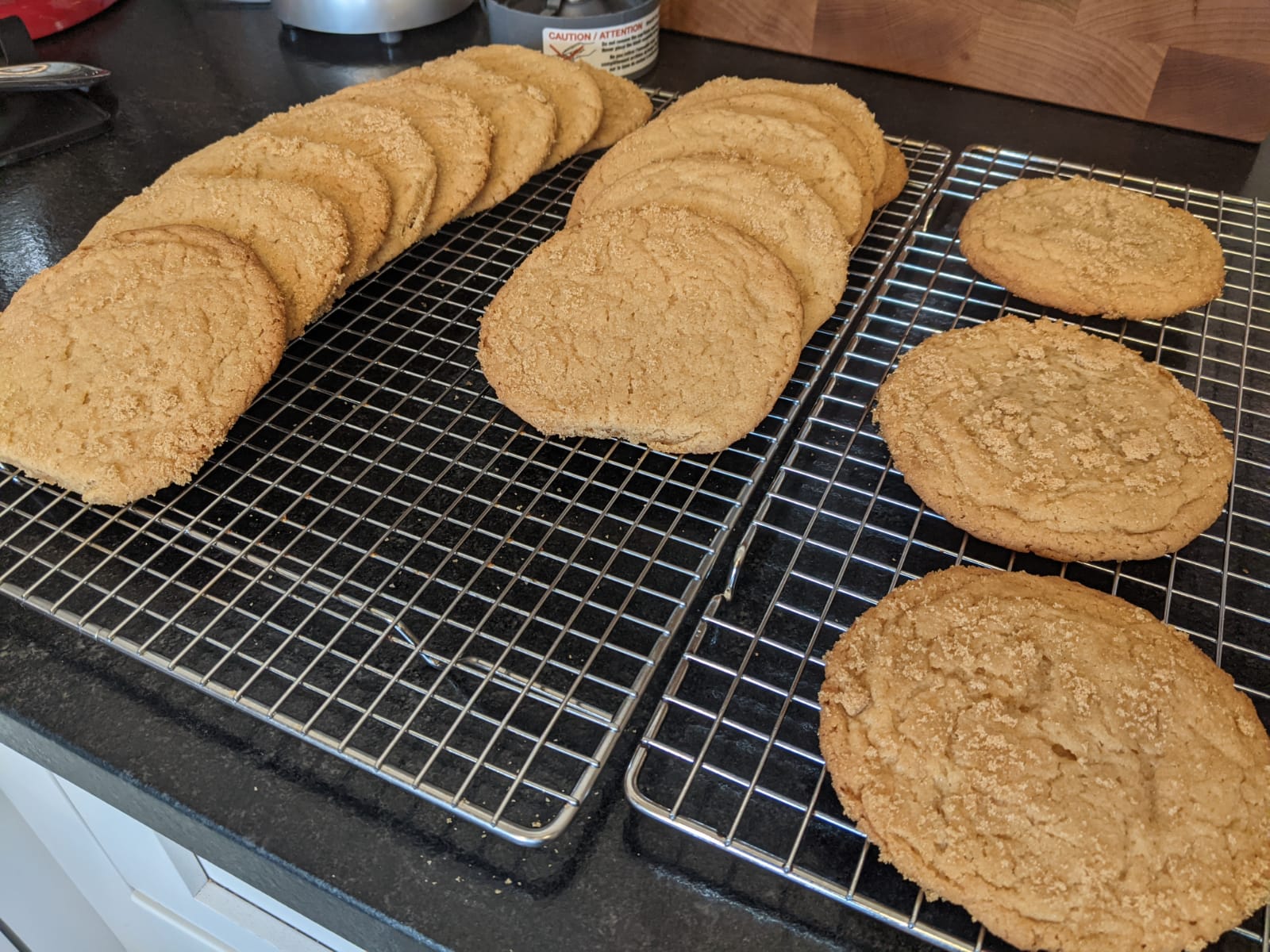
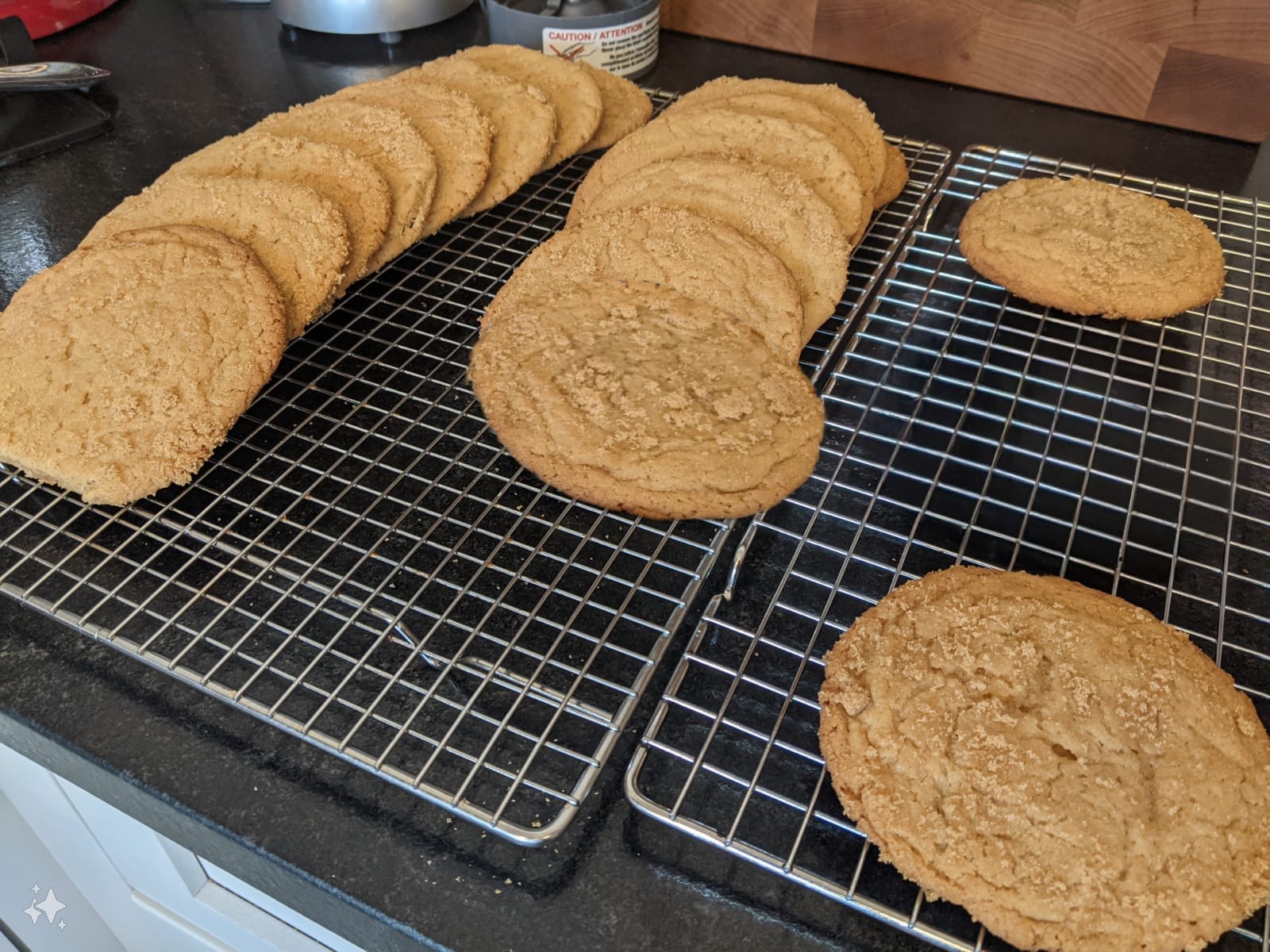
Samsung made a big deal about the new AI features available with the S24 family. These are largely similar to features Google offers on its Pixel line (and, in some cases, on any modern phone running Google apps). Still, they’re neat. Real-time language translation on phone calls. Transcription of multi-party conversations with automatic summarization. And, of course, automagic photo manipulation. Here, I moved a cookie from one cooling rack to another. It’s not perfect, but for 5 seconds of effort, it’s pretty impressive.
Before:
After:
So far, battery life has been fine but not exceptional. I can certainly get a full day on a charge unless I’m really using it heavily, and the software should be able to optimize battery use a bit more in the coming days. Connectivity seems solid, though I haven’t been out and about all that much this week. Because it’s Samsung’s “flavor” of Android, it comes with the usual set of duplicate apps: Google Calendar and Samsung Calendar. Google Clock and Samsung Clock. Etc. As a tech geek, I found it pretty easy to pick the ones I want and ignore or deactivate the others. For some users, it may cause confusion. (The Google Pixel series is “cleaner” from a software standpoint, though my sense is that the hardware isn’t quite as strong as Samsung’s. Some people also prefer some of Samsung’s software choices to the Google equivalents.)
All in all, I really like this phone and consider it a worthy upgrade to the S21, a phone I was pretty happy with over the past three years. If I think of it, I’ll try to post an update after I’ve lived with the S24 for a few months.

 Maxim Weinstein